Shin Zuan, Pl. 09
by Nakayasu Shinzaburō
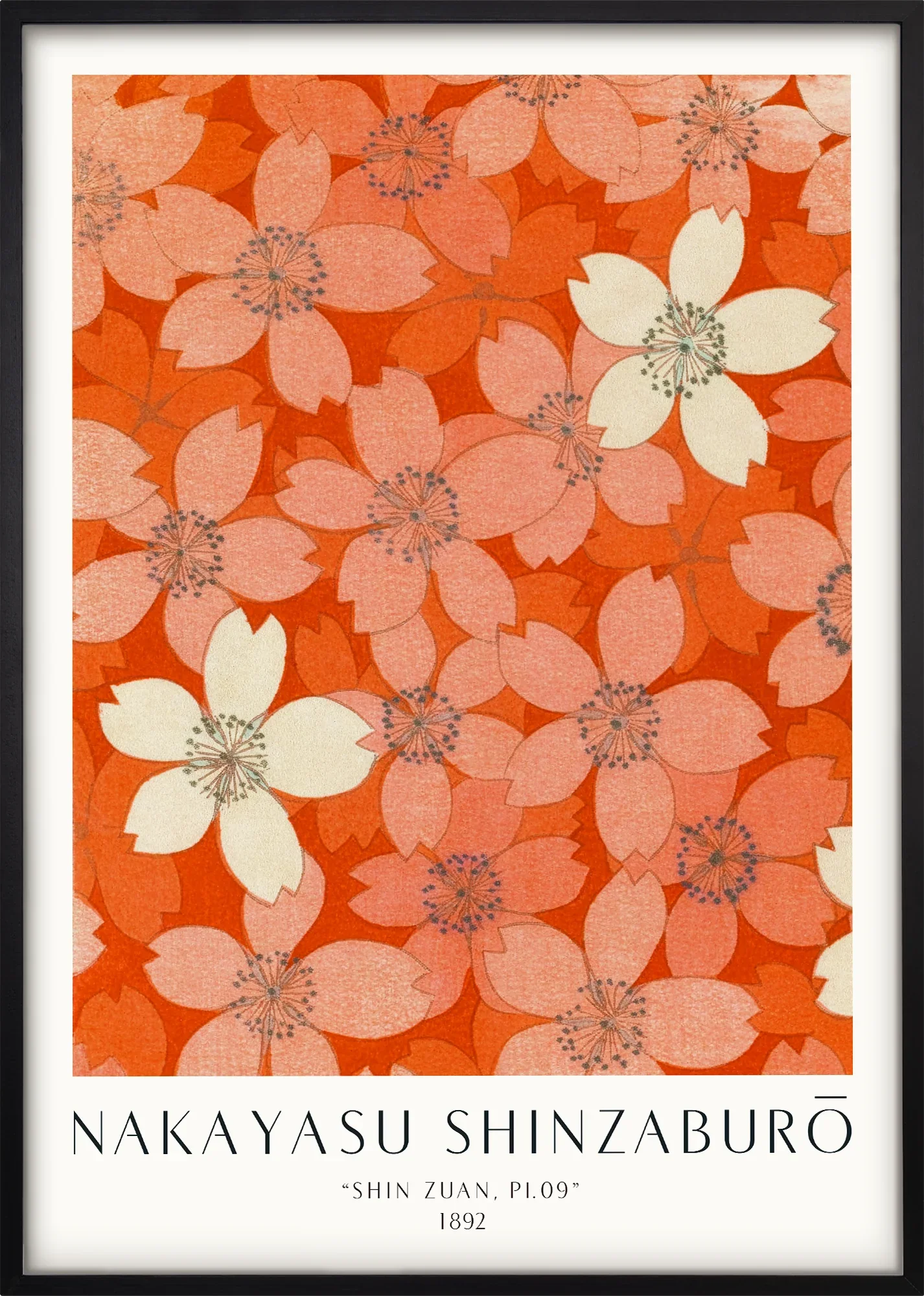
No horizon, no negative space, no single focal point: just blossom upon blossom, layered across a field of deep vermillion. This plate from Shin Zuan does something the contemplative landscape tradition rarely attempts, it turns sakura into pure pattern, flattening the flower into geometry without losing its character.
Shin Zuan (新図案) was a multi-volume design compendium published in Kyoto between 1891 and 1894, also known as Nishijin Orimono Shin Zuan, created to serve the Nishijin textile indust, the renowned weaving district whose silk fabrics had dressed the Japanese imperial court for centuries. These plates were working design references, meant to be translated into kimono and obi, which explains the deliberate, repeating logic of the composition. What reads today as bold graphic art was originally a blueprint for cloth.
The orange ground is not decorative accident. In Japanese textile tradition, warm vermillion tones carried specific seasonal and ceremonial weight, associated with vitality and spring celebration. Against it, the cream and blush petals read with the precision of a craftsman's eye, not a painter's sentiment.
This is a faithful reproduction as a giclée print, printed on museum-grade, archival fine art paper for lasting vibrancy and detail.
Product Information
Product Information
Shipping & Returns
Shipping & Returns


Shin Zuan, Pl. 09
Shin Zuan, Pl. 09
by Nakayasu Shinzaburō
No horizon, no negative space, no single focal point: just blossom upon blossom, layered across a field of deep vermillion. This plate from Shin Zuan does something the contemplative landscape tradition rarely attempts, it turns sakura into pure pattern, flattening the flower into geometry without losing its character.
Shin Zuan (新図案) was a multi-volume design compendium published in Kyoto between 1891 and 1894, also known as Nishijin Orimono Shin Zuan, created to serve the Nishijin textile indust, the renowned weaving district whose silk fabrics had dressed the Japanese imperial court for centuries. These plates were working design references, meant to be translated into kimono and obi, which explains the deliberate, repeating logic of the composition. What reads today as bold graphic art was originally a blueprint for cloth.
The orange ground is not decorative accident. In Japanese textile tradition, warm vermillion tones carried specific seasonal and ceremonial weight, associated with vitality and spring celebration. Against it, the cream and blush petals read with the precision of a craftsman's eye, not a painter's sentiment.
This is a faithful reproduction as a giclée print, printed on museum-grade, archival fine art paper for lasting vibrancy and detail.
Original: $35.10
-70%$35.10
$10.53Product Information
Product Information
Shipping & Returns
Shipping & Returns
Description
by Nakayasu Shinzaburō
No horizon, no negative space, no single focal point: just blossom upon blossom, layered across a field of deep vermillion. This plate from Shin Zuan does something the contemplative landscape tradition rarely attempts, it turns sakura into pure pattern, flattening the flower into geometry without losing its character.
Shin Zuan (新図案) was a multi-volume design compendium published in Kyoto between 1891 and 1894, also known as Nishijin Orimono Shin Zuan, created to serve the Nishijin textile indust, the renowned weaving district whose silk fabrics had dressed the Japanese imperial court for centuries. These plates were working design references, meant to be translated into kimono and obi, which explains the deliberate, repeating logic of the composition. What reads today as bold graphic art was originally a blueprint for cloth.
The orange ground is not decorative accident. In Japanese textile tradition, warm vermillion tones carried specific seasonal and ceremonial weight, associated with vitality and spring celebration. Against it, the cream and blush petals read with the precision of a craftsman's eye, not a painter's sentiment.
This is a faithful reproduction as a giclée print, printed on museum-grade, archival fine art paper for lasting vibrancy and detail.